Celebrating 400 Years of Salem with Rare Cycling Artifacts and Witch Lore

Updated: Aug 18
Salem, Massachusetts, is a town steeped in history and mystery, known worldwide for its infamous witchcraft trials of the late 1600s. This year marks the 400th anniversary of Salem, a milestone that invites reflection on its rich past and unique heritage. Among the many fascinating stories tied to Salem, one known chapter connects the town’s witch lore with the rise of cycling in the late 1800s. This post explores a rare collection of 1800s Salem Witch Bicycles and related memorabilia that capture the spirit of Salem’s history and the Golden Age of Cycling.

Close-up view of an original late 1890's Salem Witch bicycle head badge with iconic witch on a broom by R.H. Robson
The Rise of Salem Witch Bicycles in the 1880s and 1890s
In the late 19th century, cycling became a popular pastime and mode of transportation across America. Salem, with its rich historical backdrop, became a unique hub for bicycle manufacturing and branding. R.H. Robson, a local bicycle business owner, capitalized on Salem’s witch trial legacy by creating bicycles branded as the Salem Witch and Salem Scorcher. These bicycles were not only practical but also carried a distinct identity tied to Salem’s folklore.
Robson’s bicycles quickly became staples in the North Shore market during what is often called the Golden Age of Cycling. The use of the witch on a broom emblem made these bicycles instantly recognizable and connected riders to Salem’s mysterious past. This clever branding helped Robson’s products stand out in a competitive market.
Key Artifacts from the Era In this article
Original 1890s Salem Witch Bicycle Head Badge
This metal badge, measuring 2 1/2" x 1 1/2", proudly displays the Salem Witch emblem and the maker’s mark: "Made by R.H. Robson, Salem, Mass." It would have been attached to the bicycles as a mark of brand authenticity.
Witch Century Gold Plated Medals (1896 and 1897)
These medals commemorate 100-mile bicycle rides, known as century rides, organized along historical routes near Portsmouth. The medals, stamped by J. Harriott Boston, link the cycling events to the Salem Witch brand, highlighting the cultural crossover between sport and local lore.
League of American Wheelmen Fob/Pendant (not pictured, but part of the collection)
A beautiful 1890s fob featuring a red gemstone and a mother-of-pearl wheel that spins. This piece reflects the pride and community spirit among cyclists of the time.
All these items remain unrestored, preserving their original patina and authenticity, which adds to their historical value.
John Harriott and the Craft of Bicycle Medals
John Harriott was a prominent Boston jeweler, silversmith, and engraver in the late 1800s. His work became synonymous with high-end bicycle club pins, medals, and trophies. The Witch Century medals from 1896 and 1897 bear his mark, indicating their prestige.
Harriott’s medals were not just awards but symbols of achievement and community among cyclists. The century rides were challenging events that tested endurance and skill, and receiving a medal from Harriott was a mark of honor. The connection between these medals and the Salem Witch brand shows how local history and cycling culture intertwined.

An original Witch Century 1896 Gold Plated Medal.
The Cultural Impact of Salem Witch Memorabilia in Cycling
The use of Witch imagery in Salem’s cycling culture was more than marketing. It created a shared identity for riders and collectors alike. The Salem Witch memorabilia from this era reflects a blend of local pride, sporting achievement, and fascination with the occult.
Collectors today seek these rare pieces not only for their beauty but also for their story. They represent a time when Salem’s witch history was embraced in new and creative ways, extending beyond the trials into everyday life and leisure.
Why These Artifacts Matter Today
They connect modern enthusiasts with Salem’s layered history.
They highlight the early days of American cycling culture.
They preserve craftsmanship from notable makers like R.H. Robson and John Harriott.
They offer tangible links to the past, showing how folklore can influence commerce and sport.
Preserving the Legacy of Salem Witch Bicycles
Preserving these artifacts is crucial for understanding Salem’s unique place in history. The unrestored condition of the items in this collection allows historians and collectors to study the authentic materials and techniques used in the 1800s. It also helps maintain the story of how Salem’s witch lore influenced local industry and culture.
For those interested in occult history, cycling, or Americana, these pieces offer a fascinating glimpse into a time when Salem’s past inspired innovation and community spirit.
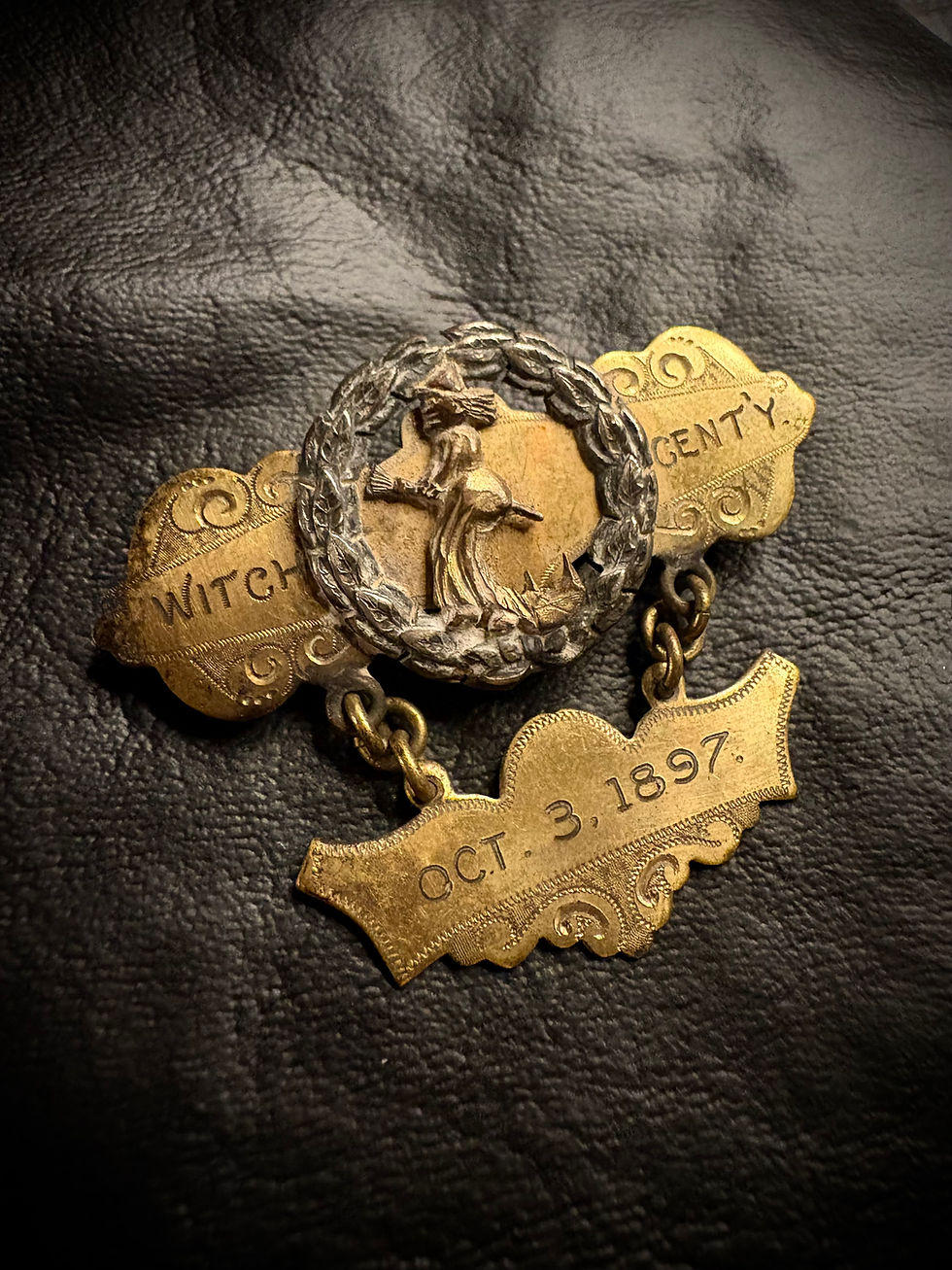
An original Witch Cent’y 1897 Gold Plated Medal
Exploring Salem’s History Through Cycling Artifacts
The 400th anniversary of Salem is an opportunity to explore the town’s history beyond the well-known witch trials. The story of late 1800s Salem Witch Bicycles and the related memorabilia reveal how Salem’s identity evolved and found new expressions in the late 19th century.
These artifacts remind us that history is not static. It lives in objects, stories, and communities that continue to celebrate and reinterpret the past. Whether you are a collector, a history buff, or someone fascinated by Salem’s witch lore, these cycling pieces offer a unique window into a remarkable era.

An image of an original Salem Witch Bicycle Poster for reference
Salem’s 400th anniversary invites us to appreciate the town’s rich heritage in all its forms. The rare cycling artifacts and Salem Witch memorabilia from the 1800s show how history, sport, and folklore can come together to create lasting cultural symbols. Exploring these unique treasures encourages us to look deeper into Salem’s past and find new ways to connect with its story. Visit the Altar Room Sacramento for more amazing history and curiosities!


Comments